New Series, New Boat
The Story
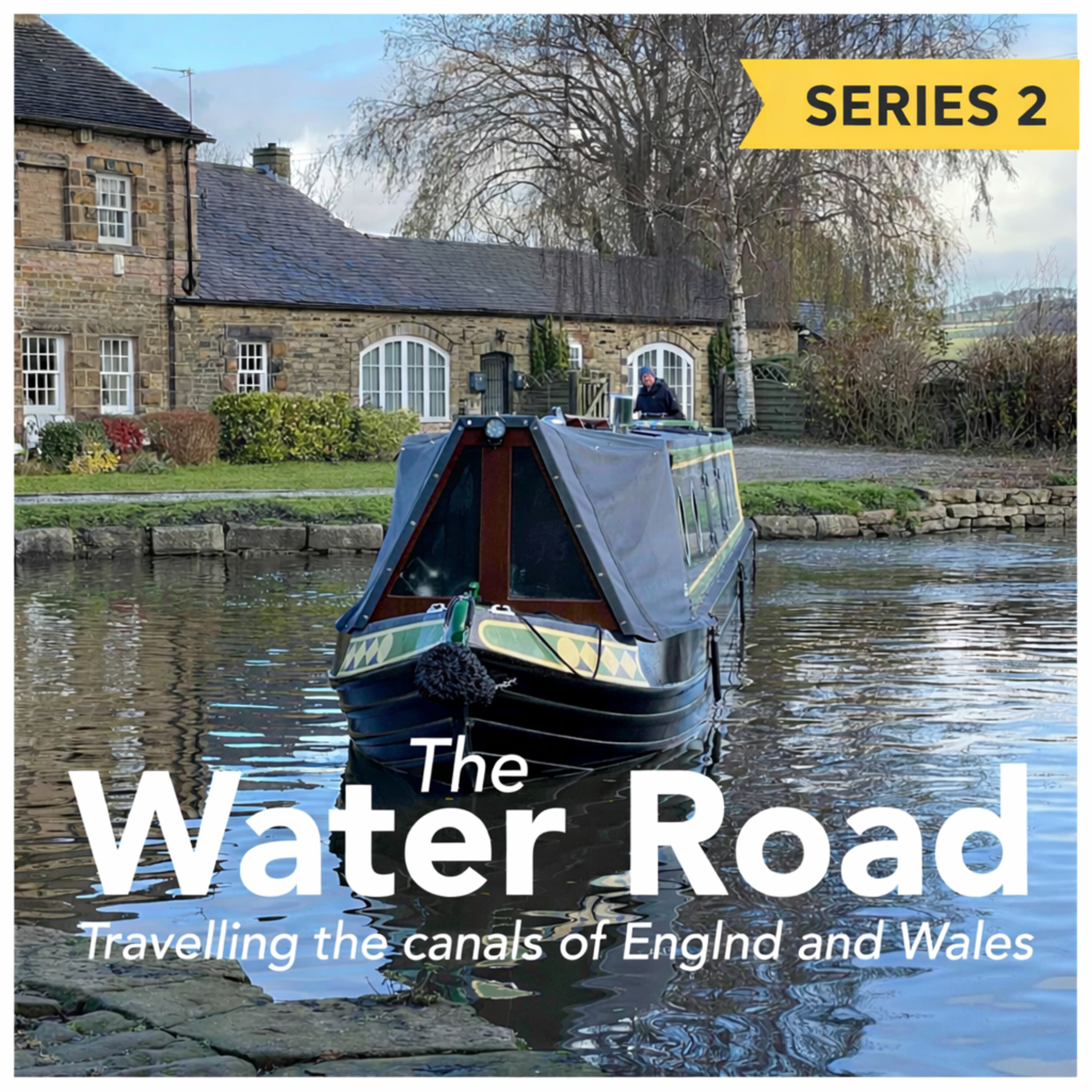
The Water Road is back for a second series! In the past few months we have moved onto our new boat, and in this episode we talk to James Attwood from Braidbar Boats who built it, and Mark Langley from Waterways World who wrote a review of it. We hear about some of the work that goes into fitting out a new boat, and the changes seen in the industry in recent years.
The Water Road is produced and presented by Adam Porter.
If you like what I do, please consider supporting me: https://ko-fi.com/thewaterroad
Hello and welcome to series 2 of The Water Rd, the podcast where we travel the canals and rivers of England and Wales, finding interesting stories, history and people along the way. In this episode I'll be introducing you to our new boat and chatting to the boat builder and the man from Waterways World magazine who reviewed it. Well, if you listen to series 1, thank you for coming back. If you're just finding us, let me quickly tell you that all episodes from series one are still available to listen to wherever you get your podcasts from.
Now, I'd love to be able to tell you what's coming up in this series, but the truth is, I don't yet know. It just depends on where we go, what's going on and who we bump into. But a lot has happened over the past few months, including selling our previous boat and moving on to a brand new one. You might remember that we spoke to Tim Tyler, the Shell builder, near the start of Series One. Well, over the summer and autumn the boat was fitted out. In many ways it's very similar to the old one. It's still 58 1/2 feet long and still a trad stern.
But the big change is that this boat is a hybrid drive with both diesel and electric propulsion. So while it can sound like this, it will mostly sound like this.
And that means that when you're moving along, what you'll mostly hear is this. I've come back to Ray Bar where our boat was built, and I'm with James Atwood, known to everyone as Jam. What I'm interested in though Jam is how does someone get into boat building? What did you have a life before boat building? I did, yeah. It was a it's a long story, but I'll try and keep it as short as possible. Friend of mine, Martin Baker AKA Spud was building boats and then he got into building boats using reclaimed Timbers, needed a hand on finishing a boat called Pyrus off because he wanted it to go to quick show.
I stopped my work at the time which was I specialised in solid wood flooring. I was doing that for quite some years, doing very well out of it, earning good money and then I must have had a bang on the head somewhere to to go over to the boats. But I helped him out finishing that boat so it could go to Crick and we did really well off the back of that and then ended up getting in at Hayford Fields Marina in a brand new unit and it all sort of started from that really. So then you worked for Hayford Fields themselves building boats as well, didn't you?
Spud didn't stay there very long, didn't see eye to eye with Shay, went on his way and carried on boat building elsewhere, different yards. And I stayed back at Hayford Fields and Shay took me on to do all the carpentry work on the boats in the Marina. And then he ended up buying a shell from, it was a Reeve shell. It was brand new, but it had been sitting in the field I think for three years. So it was probably a customer's that had it built, never paid, I don't know, but he bought that for me and let me do one of my fit outs on that.
Whatever I wanted in between doing the carpentry work on boats in the Marina. It was it was kind of shade to buy that and start the ball rolling really. And since then, you've built a lot of boats. I built a few, yeah. So that was that boat ended up being called Midnight Trace. We sold that or Shay sold it, sorry. And it went to Crick, actually went into Crick. That was never the intention. It's just something that happened. But whilst I was building that, Gary and Dave from Boating Leisure Services came and joined us at Haferfield's Marina.
And the very long story, very short is I went in as a third partner with them. So that's where the that's where the boat building side came from. And then you moved up here to Braidbart and you're building quite a lot of boats at one time here, aren't? You the sweet number is 33 stroke 4, so we've always got 3 or 4 boats in at once at different stages. We build 7A year, so yeah, it's they take about seven months to build from start to finish. And there's quite a lot of different stages. I mean, we've obviously just been through this with our boat and you, you get the empty shell in usually from Tim who we spoke to in the last series of the Water Rd.
And then there's a lot of stuff goes on that you don't ever see isn't there, behind the skin, as it were. There is an awful lot that goes on. Yeah, I mean we, we get the, as you say, we we get the boats in from Tim Tyler and the guys down there build a fantastic shell. I think they've probably built 99% of braid bar boats. But yeah, we get it in bare steel portholes or windows cutouts already in as as from the plan that goes to Tim and then we do the rest. We do absolutely everything else apart from the spray foaming.
Obviously we get a company in to do that. But yeah, there's from ballasting to batten in before the spray foam. All the deck fittings have got to be cut out all in the right place, mushroom vent cutouts. And then we start first fix wiring, which is a lot, quite a lot to do, especially in the modern boats with the with the tech and the things I've got on 1st fix plumbing lining it out. Yeah. So there's an awful lot that goes on before you see any change. But the woodwork is one of the braid bar trademarks, isn't it?
And and that's your thing, really. Yeah, yes. You walk on any boat and the most thing you see is the is the timber and the actual fit out of the boat. So it's very important. Yeah, it is what I do, it's what I enjoy doing. But there's, including myself, there's four carpenters here full time and we are all busy. Yeah, it's a lot of work involved, but we all love what we do. And it's a very neat little yard here. You've got the the arm off the canal and then you've got a woodworking shop and a varnish shop Is there's, there's a lot going on, isn't there?
Yeah. So we've got the main workshop, which is the woodworking shop that's got the three big work benches in and we store all our timber and stock stuff in there. That's where everything pretty much gets made.
Then next to that we've got the engineering shop with Jonathan and Darren, electrics and plumbing and engineering. Then the other side we've got the varnish room where a lot of stuff gets varnished in that when it's pre made so we we can build it in a workshop, certain cabinets and overheads and things that goes in there and gets varnished before it's fitted on the boat. But then some of the varnishing has to be done on the boat and then we've got the paint May where we float the boats in. It's all undercover, all heated and moisture controlled and that's where Johnny can actually get the paint on the boats.
Mark Langley from Waterways World is with us today and you're writing a boat review of this boat. And you've been writing the boat reviews for quite a long time, haven't you? So what do you look for when you're considering what boats to review? So we look at boats that are from either established boat builders, because it's always usual to see how they're updating what they are doing, but also from new boat builders as well to actually see what's coming onto the market and how different takes from different people are coming through.
And also looking at a variety of prices. So we don't always look at expensive boats. We want to look at the cheaper end of the market. We want bespoke boats, we want to take off the shelf boats, we want to have a whole range. Because this is one of the things about the boat building industry, isn't it, That almost every boat is different? It is. I mean even with off the shelf boats there's always going to be that tweaking indifference that people ask. Which means by the time it then gets down to a used boat 5-10 years down the line, it's often quite different from what it started out as as well.
So what sort of changes have you seen in the boat building industry in the years you've been doing the reviews? So it often seems now that people are more interested in the interior than the boat itself. So many years ago it would have been very much waterways enthusiasts buying boats. They're interested in the performance of the boat. Interiors are often quite modest, well built, robust but not high tech gimmick tree. And now it's more the other end of the spectrum where we have people who have really high tech interiors, but sometimes that's based on shells that maybe not the best handling or the best looking, and it's the interiors that definitely sell.
Alongside that, the reverse layout has come to be the way of doing boats, which actually might not be the most practical for those who are out cruising because walking straight into a galley for example, not really a good idea when you're out on a wet, muddy toe path. So our boat is a trag and I don't think you've seen your trag for a while. Have you? No, we semi trams, semi cruises and and Cruiser Stearns are the mainstay now and trams have an awful lot to go for them, particularly for year round boaters.
And I think that's underestimated and I think a lot of people try to bypass that by putting pram hoods on the back of boats, which is great when they're tied up completely impractical out cruising, particularly on narrow canals. So trams have a lot going for them. And also then having that space in the stern of a boat where you come in, you can take jackets off, you're not interfering with somebody cooking, you're not dripping onto a sofa as you walk in. That's that's definitely a positive. Now, because I used to do boat reviews for the the other main magazine, we've been competition for a long time.
I've got a few stories of things that went wrong during boat tests. Have you got any of those? Oh yes. So I've had a number of boats where the handling has been slightly challenging, shall we say. So there's one boat that I took out which never made it into the magazine where the boat just would not steer anything other than to port. There was clearly some something damage to the rudder underwating, sitting has only just been launched, was slightly worrying. I've also had a boat where I went to stern in a lock and the coupling disengaged for the propeller shaft so we didn't stop apart from until we hit the sill and that was when we had.
Inside. There was a poorly designed wine rack which had two bottles of Merlot in it, which flew forward at 4 miles an hour, crashing into a bulkhead and ruining a carpet. I mean, that reminds me of a story when I did a boat test. Sounds rather similar. Fortunately, I'd given the tiller back to the owner and he put the boat into reverse and the IT was a hydraulic drive. So it was a very short prop shaft and the propeller and the prop shaft just shot out the back of the boat and the boat builder had to jump in, stripped off, jumped in and shafted her towel into the hole.
It's, it is always probably I've also been on boats as well where you, you do wander into the boat sometimes and you can suddenly spot whether the boat builder has actually ever been a boater because you suddenly spot things that are just, well, that's not particularly practical for cruising or why is it being done in this way. And that then sort of gets you to poke a little bit deeper. I mean, like when you're with the other magazine, there's always that chance that you you go onto a boat and go, actually we can't put this in the magazine because it's probably not going to do the boat building much good.
But it also it's probably not a great boat and we don't really want to feature boats that are not good boats. Yeah. I mean, it's not like reviewing cars, is it? I mean, we're not trying to do a Jeremy Clarkson. No, absolutely. We don't want to do a disservice to a boat builders and there's often that feedback to boat builders as well in terms of actually, have you thought of doing this way? Because we get to see lots and lots of boats. We've all, you know, everything from GRP cruisers, river cruisers, even some of these sort of semi seagoing coastal boats.
And we can give a lot of feedback and support to boat builders, but that requires them to listen as well and also to guide the customers in the right way, because some customers go out to buy a boat having never, ever set foot on a boat before. And they will often ask for things that are not practical. And boat builders really need to guide people. The relationship between the customer and the boat builder is crucial in that isn't it is is trying to find things that work but also is what the customer wants.
Absolutely, and I will have to say that some boat builders can be quite challenging to work with as well. So if there isn't a good relationship between the customer and the boat builder, it's not going to make for a happy build. And I think you can spot some boat builders who clearly will not get on with some customers. And I think that's something that people need to look up front. Are they going to be able to work with them? And also there are boat builders who will turn away customers because they are being asked to build boats.
That is not their style. And that's that's not going to work out. But if you try to get somebody to build a wide beam boat who's never done one before, it may not work out as well as somebody who's really experienced. So if you're looking to buy a boat, then I think that reading the boat test is is quite a good way of learning stuff, isn't it? And there's a huge archive as well. Absolutely and it's trying to think about what do you want in the boat and then looking at similar boats and they absolutely.
The Waters World Archives are huge and going back to 1972 with the types of boats that are out there and whilst not all of them might be available digitally, you can usually get hold of second hand copies to actually find things and especially second hand craft they'll often have been covered or similar craft will have been covered maybe 1520 years ago. Well, Mark Langley's review of our boat is in the February 2026 edition of Waterways World, if you want to look that up. And that's all for this episode of the Water Rd.
The podcast is produced and presented by me, Adam Porter. Next time we'll have an interview with someone you very rarely hear from, Nick ATI, the man behind the popular route planning website Canal Plan AC. I just started writing these for fun. It was a hobby programming way before there was the Internet or anything, and we just used it for our own use. But when the Internet came along, there was the opportunity to basically let other people use it. And why not? Don't forget to follow or subscribe to the Water Rd so you're alerted when new episodes are published.
And if you're enjoying what you're hearing, please leave us a nice review because it really does help more people to find us. Thank you for listening to the Water Rd.
 Apple Podcasts
 Castbox
 Castro
 Goodpods
 Moon FM
 Overcast
 Pocket Casts
 Podbean
 Podcast Addict
 Podcast Republic
 Spotify