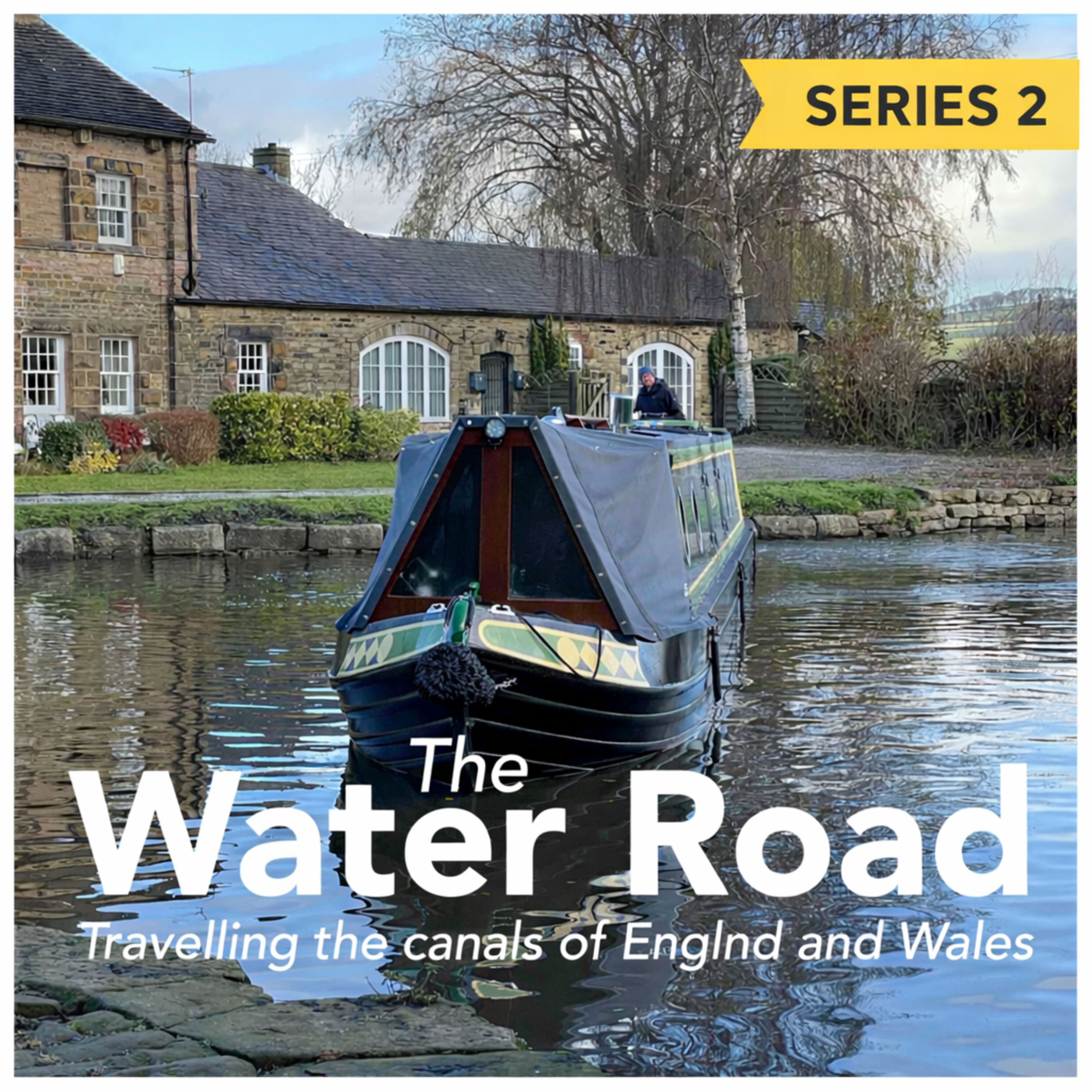
Marple Wharf
The Story
A former trans-shipment warehouse at Marple Junction, where the Macclesfield and Peak Forest Canals meet, is currently being renovated by a community project. In this episode of The Water Road we speak to its chair, Sue Ingham, who tells us about the history of the building, the way the people of the town clubbed together to buy it, and what it will become later this year thanks in part to a big Lottery heritage grant.
The Water Road is produced and presented by Adam Porter.
If you enjoy the series please consider supporting me here: https://ko-fi.com/thewaterroad
We're just morning up at Marple Junction at the end of the Macclesfield Canal. Well, I suppose it's really the beginning of the Mac because the Junction Bridge is bridge number one, but there's a historic warehouse here that's under restoration, and that's what we'll be finding out about in this episode of the Water Rd. Well, I've said it before and I'm certain I'll say it again, but there's something a bit special about canal junctions. Marple is where the Macclesfield Canal meets the Peak Forest and it's a lovely setting with an elegant junction bridge, far reaching views of the hills and lots of historic buildings.
The Peak Forest Canal was here first with a flight of 16 locks opened in eighteen O 4 joining the upper part of the canal to the lower which is a level 209 feet down. It was built to take goods including Derbyshire limestone to Manchester. The Macclesfield Canal came later being completed in 1831, linking to the Trenton Mersey and opening up trade routes to the Midlands. The area would have been a hive of activity because this was also a centre for cotton spinning. Right by the junction is the warehouse at Marple Wharf, which is currently being restored by a community interest company and I've been speaking to its chair, Sue Ingham.
Sue, you're chair of the Marple Wharf project. It's a really important building for this part of the canal, isn't it? What is history? It certainly is one of the most iconic buildings in Marple. It was a former transshipment warehouse back in the early 1800s, so probably we don't know for sure when it was built, but it was probably around 18201830 and it's on the side of the Macclesfield Canal as it meets the the Peak Forest Canal. So it would be a really important warehouse for various boats, probably Samuel Ono's boats for the mill down in Mellor to come in and unload its cotton and coal and lime, of course, because we have the lime kills just across the way there.
I mean, one of the main things about it that boaters will spot is that it's got like a wet dock that comes all the way through it, hasn't it it? Has it's called actually a finger dock? It actually comes right through the building out into this garden area and that's where the boats would have gone in to be undercover. So obviously things like lime, which wouldn't be good to get wet and also cotton, you wouldn't want those kind of goods to start getting wet. So they would come into the finger dot and be unloaded via the cranes, actually into the into the area and stored there before going off by horse and cart to the various places.
Obviously it was in use in the 1800s. When did it stop being used and what sort of state has it been in in recent years? I think it was still in use in the early 1900s for goods actually. I've got some really super photographs of the butty boats being used in this stretch of the canal. British Waterways then acquired it, I don't know exactly when, and used it as offices for many, many years and then probably, I would say it must be about 10 or 12 years ago, they ceased using it and since then it has obviously fallen into decline.
So what sort of state was it in when the the Marple Wharf project got hold of it? The roof needed replacing. It was in a pretty, pretty dire Strait really. Obviously needs a lot of work doing it still needs quite a bit of work. But we've, we've made a great deal of progress, not least in actually buying the building, which was a huge undertaking actually to, to raise the money to actually buy the building. And then we, we are actually now in the process of renovating and refurbishing it. So some of that money came from the lottery, I think didn't.
It some of it did. In fact a lot of it came from the lottery initially though. I mean this is a fantastic community project. It's actually the community who raised just under £200,000 via we launched an investment bond scheme. A lot of people in Marple purchased £100 bonds. They could purchase more than that and many people did, but that raised just under £200,000 and that meant that we could apply for the Government's levelling up fund, the Community ownership Fund. And because that's a match fund, we were unable to to buy the building and start the renovations.
And that happened in 2022. What we did then, we managed to buy the building, remove all the roof and replace it. And actually we were able to replace nearly all the original tiles. We only had to find a few from various archive places. We then got inside and ripped out the horrible partitions, the 1960s partitions that were in the first floor and expose the beam. So the the first floor is going to be an absolutely beautiful space. We also repointed the entire outside in what's called lime mortar pointing.
That would have been the original mortar that would have been on the building. Having done that, we then had a quite a pause whilst we started applying for National Lottery Heritage Fund grants last year. We were very successful in, I'm quite excited about it actually. So we actually secured just about £900,000 to finish the refurbishments and the renovations and that's where we are now. OK, well look, I know it's a bit of a building site in there, but shall we go in and have a look? Yes, please.
Let's do. Right, so we're inside now and it's a, it's a bit of an empty shell at the moment. What's it going to be like in here when it's all finished? It's going to be a heritage centre with a heritage shop and also a really lovely cafe. The cafe is going to be run by a local restauranteur, all things nice. And so people will be able to come in, have a coffee and cake, they'll be able to browse the shop. But the main thing is there's going to be a really interactive museum exhibition, and it's all focused on the Industrial Revolution and how Marple changed from this rural little town into a nationally important industrial powerhouse.
And that was pretty much down to one man really, wasn't it it? Was Samuel Ono. Some people call him the father of Marple. We're doing something really exciting actually. We're working with AI specialists, technology specialists, and there's going to be a character of Samuel Ono exhibit, an interactive exhibit where people can go and actually have a conversation with Samuel Ono. It's really exciting and we're we're really at the cutting edge of AI technology working with this, this company called Anymind AI and that that's going to form quite a big part of the, of the exhibition because we are in quite a small space.
It's not huge and it's multifunctional with we will rely quite a lot on digital interpretation so that people can get the overview of the industrial revolution here in Marple as well as Samuel Ohno, they can find out more about the, the working boats, the people who lived on them. For example, we will be installing an authentic what's called butty boat into the finger dock in the garden and and people there will be able to learn about how how families lived and worked on the canals. We will have another character mind, probably the wife of a bargeman, and she you'll be able to have a conversation with her about life on the boat.
So that's the ground floor and then you've got the the first floor as well. We have the the first floor is going to be it's purpose designed, dedicated to health and well-being activities like Tai chi, aikido and yoga. Again, it'll be a beautiful, airy space in a really lovely location. Probably about 45% of the capacity is already reserved by various groups in Marple and that will obviously help us to generate income to allow us to have this exhibition for for free. So it's spring now. When are you hoping everything will be done?
It's still a bit of a building site here, but all being well, we're hoping we will be open in September, I think. I think we probably will. Be well, I wish you all the best of luck. Thank you so much.
Well, it's been great to hear about the work of the Marple Wharf project and it's going to be a real asset to the town. And that's all from here at Marple Wharf. The Water Rd is produced and presented by me, Adam Porten. Next time, I'll be introducing you to our newest crew member, Mack, the Border Terrier puppy, and we'll be hearing about other pets who live aboard. He always turns heads but obviously when when we're here on the on the Moor and we can lay him out in the garden, but when you're walking up and down the torfach as well.
It's it's a. Good conversation stuff there. Are lots of people stopping? I wonder what we're doing walking and talking. Don't forget to subscribe or follow us wherever you get your podcasts so you'll be alerted when new episodes are published and all previous episodes are always available to stream or download. Thank you for listening to The Water Rd.
 Apple Podcasts
 Castbox
 Castro
 Goodpods
 Moon FM
 Overcast
 Pocket Casts
 Podbean
 Podcast Addict
 Podcast Republic
 Spotify